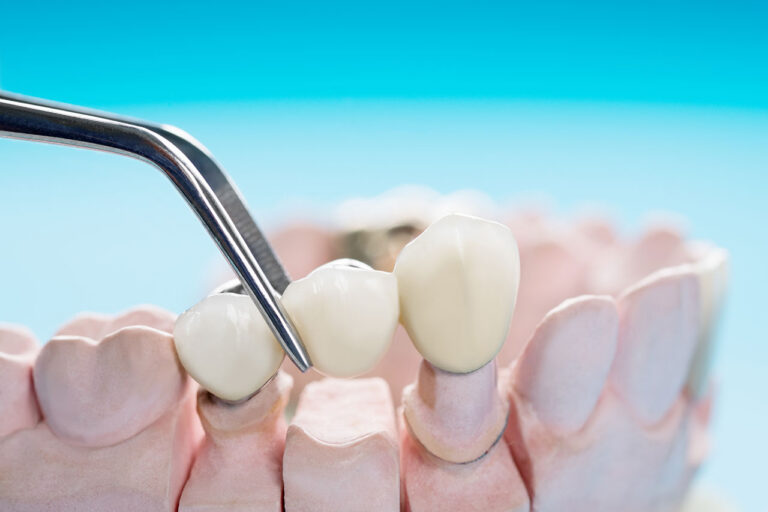

Not every damaged tooth fits neatly into the category of needing either a small filling or a full dental crown. Sometimes a tooth has lost too much structure for a routine filling, yet enough healthy enamel remains that covering the entire tooth may be unnecessary. In those situations, dental inlays and onlays in West Bloomfield may provide a middle-ground restorative option.
Inlays and onlays are custom restorations designed to replace damaged portions of a tooth while preserving healthy structure that does not need to be covered. They are most often used on back teeth, where chewing forces are stronger and the anatomy of the tooth includes several peaks and valleys.
What Are Dental Inlays and Onlays?
A dental inlay is a custom restoration that fits within the raised cusps of a tooth. It replaces damaged structure in the central chewing area without extending over the outer cusps.
A dental onlay covers a larger portion of the tooth. In addition to restoring the internal chewing surface, an onlay extends over one or more cusps when those areas are weakened or damaged.
Both restorations are made to fit the individual tooth rather than being shaped entirely inside the mouth like a direct filling. Materials may include dental ceramic or other restorative materials selected according to the clinical situation.
The goal is to rebuild the damaged portion while leaving healthy, strong tooth structure intact whenever possible.
How Is an Inlay Different From a Filling?
A traditional composite filling is placed directly into the prepared tooth. The dentist shapes and cures the material during the same appointment.
An inlay is created to fit a specific prepared space. It can provide additional strength and precision when the damaged area is larger than what would be ideal for a routine direct filling.
Very large fillings can place stress on thin remaining tooth walls. As chewing forces continue over time, those walls may flex or fracture. A custom inlay can be considered when the internal portion of the tooth needs significant restoration but the cusps remain strong enough to preserve.
How Is an Onlay Different From a Dental Crown?
A dental crown typically covers the visible portion of the tooth above the gumline. To make room for the restoration, tooth structure must be prepared around multiple surfaces.
An onlay is more selective. It covers damaged or weakened areas while preserving portions of the tooth that remain strong.
For example, if one cusp of a molar has fractured but the rest of the tooth is healthy, an onlay may be able to cover and protect that cusp without requiring full coverage around the entire tooth.
However, a crown may still be the better option when damage is extensive, several cusps are weakened, a crack significantly affects the tooth, or there is not enough reliable structure to support a partial restoration.
Benefits of Dental Inlays and Onlays
- Preservation of healthy tooth structure: Treatment can focus on damaged areas while leaving strong portions of the tooth intact.
- Support for moderately damaged teeth: Inlays and onlays can provide an option when a filling may be too limited but a full crown is not necessary.
- Customized fit: The restoration is designed specifically for the prepared tooth and surrounding bite.
- Protection for weakened cusps: An onlay can cover selected chewing surfaces that need additional support.
- Natural appearance: Tooth-colored materials can be selected to complement surrounding enamel.
- Durable chewing surface: Custom restorations are designed to tolerate the forces placed on back teeth.
- Defined contacts: A carefully designed restoration can recreate contact with neighboring teeth and reduce areas where food repeatedly catches.
When Might a Dentist Recommend an Inlay?
An inlay may be considered when a cavity or failing filling occupies a relatively large portion of the center of a tooth but the cusps remain stable. It may also be used when a direct filling is unlikely to provide the desired long-term support.
The dentist evaluates the thickness of remaining tooth walls, the amount of healthy enamel, bite pressure, and any signs of cracking.
A previous large filling may also be replaced with an inlay if the surrounding structure is still strong enough to preserve. However, if the tooth has become significantly weaker over time, an onlay or crown may be more appropriate.
When Might a Dentist Recommend an Onlay?
An onlay may be recommended when damage extends onto one or more cusps. Back teeth have raised areas that absorb substantial chewing pressure, so a weakened cusp can be vulnerable to fracture.
Covering the compromised cusp can help distribute biting forces across the restoration instead of concentrating pressure on a thin remaining section of natural tooth.
Onlays may also be considered after removal of a large old restoration when some areas of the tooth remain healthy enough that full crown coverage is unnecessary.
How Does the Dentist Decide Between a Filling, Inlay, Onlay, and Crown?
The decision begins with how much healthy tooth structure remains. Small cavities are commonly restored with fillings because the surrounding tooth is strong enough to support the repair.
Moderate damage may move treatment into inlay or onlay territory. If the internal portion is affected but cusps remain healthy, an inlay may be appropriate. If one or more cusps need coverage, an onlay may provide added protection.
When damage is extensive around most of the tooth, a crown may offer more predictable coverage. A crown may also be recommended for certain fractured teeth, teeth with very large existing restorations, or teeth that need extensive protection after other treatment.
The size of the restoration is not the only factor. Tooth location, bite forces, grinding habits, decay risk, cracks, and the condition of neighboring teeth all contribute to the decision.
What Happens During Inlay or Onlay Treatment?
First, the tooth is numbed as needed and damaged or decayed structure is removed. Any failing restorative material is also removed when appropriate.
The remaining tooth is shaped so the custom restoration can fit securely. The dentist preserves sound structure while creating smooth, stable margins for the inlay or onlay.
A digital scan or impression is then used to capture the prepared tooth, neighboring teeth, and bite relationship. This information guides the design of the restoration.
Depending on the technology and treatment workflow being used, a temporary restoration may be placed while the final inlay or onlay is created. The dentist will explain whether treatment can be completed in one visit or requires a separate delivery appointment.
Before final bonding, the restoration is checked for fit, contact, color, and bite. Dental adhesive and cement are used to secure it to the tooth. The dentist then removes excess material, checks the bite again, and polishes the restoration.
Do Dental Inlays and Onlays Hurt?
Local anesthesia is typically used when decay or existing restorative material must be removed from a sensitive tooth. During treatment, patients may feel pressure or vibration but should not experience sharp pain.
Some temporary sensitivity may occur afterward, particularly to pressure or temperature. This often improves as the tooth settles.
If the bite feels unusually high or chewing pain persists, call the dental office. A restoration that contacts too strongly may need a minor adjustment.
Severe or increasing pain should also be evaluated because it can indicate deeper inflammation, cracking, or another problem that requires attention.
How Long Do Dental Inlays and Onlays Last?
Inlays and onlays are designed for durability, but their lifespan varies. The amount of remaining tooth structure, restoration material, bite, home care, diet, and grinding habits all influence longevity.
The bond between the restoration and tooth also needs to remain healthy. If decay develops around an edge, the restoration may eventually need repair or replacement.
Patients who grind their teeth may place heavier pressure on posterior restorations. A night guard may be recommended to protect both natural teeth and dental work.
Regular exams allow the dentist to monitor the restoration and identify small changes such as wear, marginal staining, cracks, or recurrent decay.
Can a Tooth Get a Cavity Under an Inlay or Onlay?
Yes. The restorative material itself cannot develop a cavity, but the natural tooth around it can still decay.
Plaque can collect near the edges of the restoration. If acids repeatedly attack the enamel in that area, recurrent decay may form.
Brush twice daily with fluoride toothpaste and clean between teeth every day. Pay particular attention to flossing contacts around restored back teeth, where food may otherwise remain trapped.
Can an Old Filling Be Replaced With an Inlay or Onlay?
Sometimes. A large filling may weaken, crack, develop decay around its edges, or leave thin tooth structure that needs additional support.
When the old filling is removed, the dentist evaluates what remains. If enough healthy structure is present, an inlay or onlay may provide a conservative replacement.
If the tooth is more extensively compromised than expected, a crown may be necessary instead. The final recommendation depends on the actual condition of the tooth after failing material and decay have been removed.
What Happens if You Delay Restoring a Damaged Tooth?
A weakened tooth does not necessarily stay in the same condition. Chewing pressure can cause a small crack or thin cusp to fracture further.
Decay also tends to progress if the environment that caused it does not change. A problem that could have been restored with a filling or inlay may eventually require an onlay, crown, root canal, or extraction.
That does not mean every damaged tooth requires immediate extensive treatment. Rather, it means an evaluation is useful when a filling breaks, part of a tooth chips, or a tooth begins catching food or hurting during chewing.
How Do You Care for an Inlay or Onlay?
Care is similar to caring for natural teeth. Brush twice daily with fluoride toothpaste and clean between the restored tooth and its neighbors every day.
Avoid chewing ice and using your teeth to open packaging. Hard objects can fracture both natural enamel and restorations.
If you grind or clench, discuss protection with your dentist. Repeated nighttime pressure can contribute to cracks, wear, or restoration damage.
Continue regular dental visits so your dentist can check the restoration, surrounding tooth structure, gum health, and bite.
Frequently Asked Questions About Dental Inlays and Onlays
Is an onlay the same thing as a crown?
No. A crown generally covers most of the visible tooth, while an onlay covers selected damaged areas and one or more cusps.
Is an inlay stronger than a regular filling?
An inlay may provide additional support in larger areas where a routine filling would be less ideal. The appropriate restoration still depends on the specific condition of the tooth.
Can inlays and onlays look natural?
Yes. Tooth-colored materials can be selected to blend with surrounding enamel, particularly when ceramic restorations are used.
Can I chew normally after getting an inlay or onlay?
Once the final restoration has been bonded and numbness has worn off, normal chewing can usually resume according to your dentist’s instructions.
How do I know whether I need an onlay or a crown?
Your dentist evaluates how much healthy tooth remains, whether the cusps are strong, the location of cracks or decay, and the amount of biting pressure the tooth receives.
Preserve Healthy Tooth Structure When Possible
Dental inlays and onlays can fill an important space between routine fillings and full crowns. By restoring damaged areas while preserving healthy portions of the tooth, these custom restorations may provide an effective solution for moderate decay, fractures, or failing large fillings.
To learn whether dental inlays and onlays in West Bloomfield are appropriate for your tooth, call Twin Oaks Dental Studio at (248) 553-3100 to schedule a consultation. You can also contact Twin Oaks Dental Studio online. The practice is located at 2300 Haggerty Rd, Suite 2040, West Bloomfield, MI 48323.