Losing one tooth can create a surprisingly large number of questions. Should the space be replaced? Will nearby teeth move? How long does treatment take? For patients considering a fixed tooth replacement, a dental bridge in West Bloomfield is one established option that can restore the missing tooth without placing a removable appliance.
Dental implants are another common option, and the two treatments work in different ways. A traditional dental bridge uses neighboring teeth for support, while an implant uses a post placed in the jaw to support its restoration. Neither approach is automatically right for every patient. The health of neighboring teeth, available bone, treatment timeline, medical history, bite, maintenance needs, and personal preferences all affect the decision.
Why Replace a Missing Tooth?
A missing tooth may not seem urgent, especially if the space is toward the back of the mouth. However, teeth work together as a system. When one tooth is missing, nearby teeth may gradually tilt or drift toward the open space.
The opposing tooth may also move because it no longer has normal contact. These changes can alter the bite and may make some areas more difficult to clean.
Chewing patterns can change as well. People often begin favoring the opposite side without realizing it. Replacing the tooth can help distribute chewing forces more evenly and restore a complete contact point within the dental arch.
There are exceptions. In some situations, a dentist may determine that a particular missing tooth does not need to be replaced. The decision should be based on the location, bite, remaining teeth, and overall treatment plan rather than a general rule.
What Is a Dental Bridge?
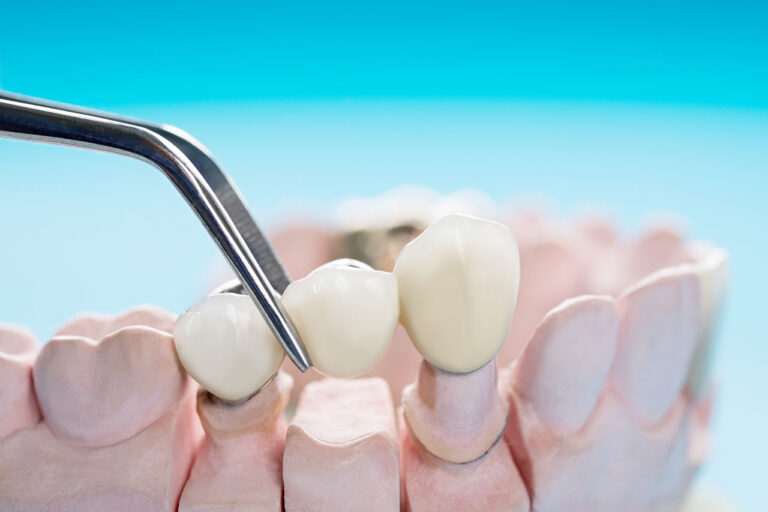
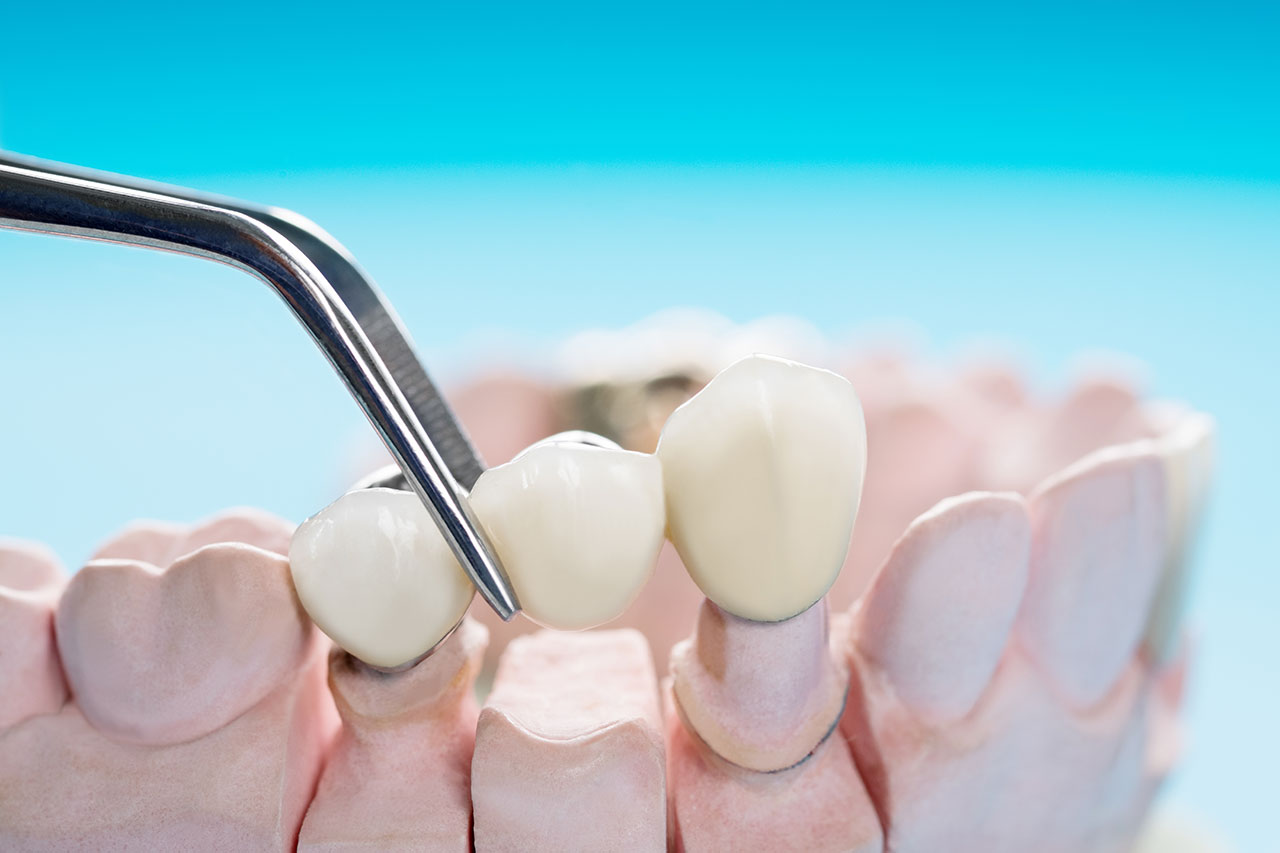
A traditional dental bridge replaces a missing tooth with an artificial tooth called a pontic. The pontic is connected to crowns placed over natural teeth on either side of the space.
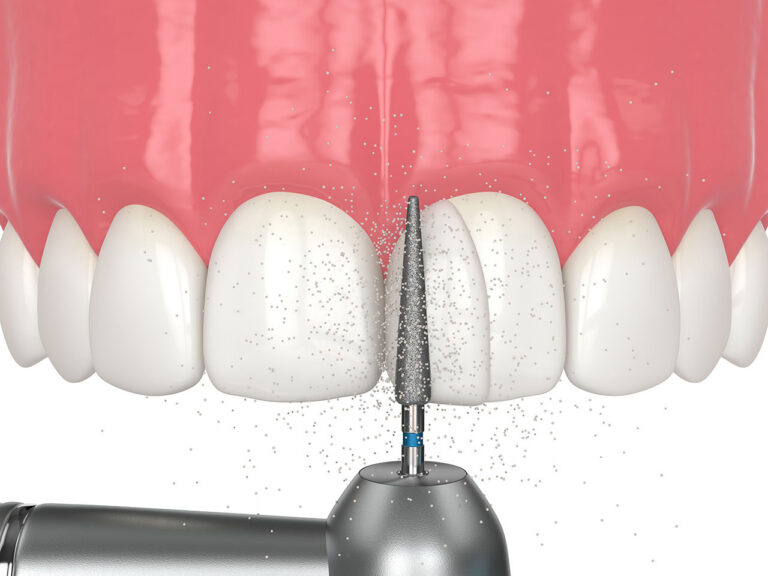
Those supporting teeth are prepared so the crowns can fit over them. The bridge is created as one connected restoration and cemented into place. Unlike a removable partial denture, the patient does not take the bridge out at home.
Dental bridges can replace one tooth or, in selected circumstances, more than one. However, the span, strength of the supporting teeth, and bite forces must be evaluated carefully. Longer bridges place greater demands on their supports.
What Is a Dental Implant?
A dental implant is a small post placed into the jawbone to replace the root portion of a missing tooth. After healing, a connector and crown are attached to restore the visible part of the tooth.
An implant generally does not require neighboring healthy teeth to be shaped for support. However, implant treatment involves a surgical procedure and requires enough healthy bone and gum tissue for predictable placement.
Healing takes time because the implant must become stable within the jaw before it supports the final restoration. The overall timeline therefore may be longer than a bridge, although the exact schedule differs from patient to patient.
Benefits of Dental Bridges
- Fixed tooth replacement: A dental bridge stays in the mouth rather than being removed for eating or cleaning.
- No implant surgery: Traditional bridge treatment does not require placement of a post into the jawbone.
- Potentially shorter treatment timeline: A bridge can often be completed without waiting months for implant integration.
- Restored chewing contact: The artificial tooth fills the open space and helps restore function in the dental arch.
- Natural-looking materials: Modern bridge restorations can be designed to complement neighboring teeth.
- Useful when neighboring teeth already need crowns: A bridge may address a missing tooth while also restoring adjacent damaged teeth.
- An option when implant treatment is not suitable: Medical, anatomical, or personal considerations may make a bridge the preferred fixed solution.
How Does a Dental Bridge Compare With an Implant?
The most important difference is where the replacement gets its support. A bridge depends on neighboring teeth, while an implant depends on the jawbone.
If the teeth next to a missing space are completely healthy and have never needed large restorations, preparing them for bridge crowns means removing some healthy tooth structure. An implant may allow those teeth to remain untouched.
However, if neighboring teeth already have large fillings, fractures, or crowns that need replacement, incorporating them into a bridge may make more sense. The dentist evaluates each tooth individually rather than applying the same rule to every missing tooth.
How Long Does Dental Bridge Treatment Take?
Bridge treatment usually begins by preparing the supporting teeth. Impressions or digital scans are taken so the restoration can be created to fit the mouth precisely.
A temporary bridge may be placed while the final restoration is fabricated. The temporary protects prepared teeth and maintains appearance and function during the laboratory phase.
At the delivery visit, the dentist removes the temporary, checks the bridge, evaluates the bite, and confirms that the restoration fits appropriately before cementing it in place.
The total process may be shorter than implant treatment because no bone integration period is necessary. However, the exact schedule depends on tooth health, gum condition, laboratory needs, and whether additional treatment is required first.
How Long Does Dental Implant Treatment Take?
Implant treatment generally involves more stages. The dentist first evaluates the jaw and plans placement. Three-dimensional imaging may be used to assess bone volume and nearby structures.
The implant is then placed surgically. A healing period follows while the surrounding bone stabilizes around the implant. After appropriate healing, the final crown can be designed and attached.
Some patients need additional procedures such as bone grafting, which can extend the timeline. In other cases, implant treatment can move forward more directly.
The longer timeline is not necessarily a disadvantage for every patient. It is simply one factor to consider alongside preservation of neighboring teeth, surgical preferences, long-term maintenance, and overall treatment goals.
What Happens to the Bone After a Tooth Is Lost?
Natural tooth roots transfer forces into the surrounding jaw during function. After a tooth is removed, the bone in that area no longer receives the same stimulation and may gradually change in volume.
A dental implant is placed within the bone and can help preserve support in the area where it functions. A traditional bridge sits above the gum and does not replace the tooth root, so it does not interact with the jaw in the same way.
Bone changes do not automatically mean a bridge is a poor option. Bridges have been used successfully for many patients. However, bone condition is one of several differences worth understanding when comparing treatments.
How Do You Clean Under a Dental Bridge?
A bridge cannot be flossed exactly like separate natural teeth because the artificial tooth is connected to the supporting crowns. Plaque and food can still collect beneath the pontic, so the area needs daily cleaning.
Floss threaders, specialized bridge floss, interdental brushes, or a water flosser may be recommended. The dental team can demonstrate how to guide a cleaning tool beneath the bridge and along the gumline.
The supporting teeth are especially important. A cavity developing at the edge of one supporting crown can affect the entire bridge. Consistent home care therefore plays a major role in long-term success.
How Do You Clean a Dental Implant?
A single implant crown is generally cleaned in a way similar to a natural tooth. Brush around the gumline and clean between the implant and neighboring teeth every day.
The implant itself cannot get a cavity, but the surrounding gums and bone can develop inflammation if plaque accumulates. Therefore, implant maintenance is not optional simply because the crown is artificial.
Professional dental visits allow the team to monitor tissue health, bite forces, and the condition of both natural and restored teeth.
Which Option Is Better if You Grind Your Teeth?
Grinding and clenching can affect both bridges and implants. Heavy repeated pressure may chip ceramic, loosen components, wear opposing teeth, or place additional stress on supporting structures.
The dentist evaluates where the forces occur and may recommend a protective night guard. Bite design is also important because the goal is to avoid creating a restoration that receives excessive contact.
Grinding does not automatically rule out either treatment. It simply means the bite and long-term protection deserve additional attention.
What if the Teeth Next to the Gap Already Have Crowns?
This is an important treatment-planning question. If neighboring crowns are healthy and relatively new, replacing them only to create a bridge may not be desirable. In that situation, an implant could preserve the existing restorations.
On the other hand, if those crowns are failing or the teeth need substantial restorative treatment anyway, a bridge may address several problems together.
The condition of each supporting tooth, its root, gum health, and amount of remaining structure must be evaluated before it is used as part of a bridge.
When Might a Dental Bridge Be Considered?
A dental bridge may be considered when a patient wants a fixed replacement but prefers to avoid implant surgery. It may also be appropriate when the supporting teeth would benefit from crowns independently of the missing tooth.
Some patients have medical or anatomical factors that make implant treatment less suitable. Others may prefer a bridge because of timing, treatment goals, or personal priorities.
However, enough healthy tooth and periodontal support must be present for the bridge. A weak or mobile neighboring tooth may not provide a reliable foundation.
When Might a Dental Implant Be Considered?
An implant may be attractive when the teeth next to the space are healthy and the patient wants to avoid preparing them for crowns. It may also be considered when preserving bone in the missing-tooth area is an important goal.
Patients need adequate healing ability, healthy gum tissue, and enough bone for placement. Smoking, uncontrolled health conditions, active gum disease, or certain medications may influence treatment planning.
A comprehensive evaluation helps determine whether an implant is realistic and whether additional treatment would be needed beforehand.
What About a Removable Partial Denture?
A bridge and an implant are not the only ways to replace a missing tooth. A removable partial denture may replace one or several teeth without permanently altering every neighboring tooth.
Partial dentures can be especially useful when several spaces are present or when fixed treatment is not the preferred option. However, they are removable and may feel different during chewing and speaking.
Discussing all appropriate options makes it easier to compare treatment time, maintenance, comfort, cost, and long-term goals.
Frequently Asked Questions About Dental Bridges and Implants
Does a dental bridge come out at night?
No. A traditional fixed dental bridge is cemented in place and is not removed by the patient. It should be cleaned carefully every day.
Can a bridge replace more than one missing tooth?
Sometimes. The dentist must evaluate the length of the space, strength of supporting teeth, bite forces, and location before deciding whether a multi-tooth bridge is appropriate.
Does a dental implant require surgery?
Yes. The implant post is placed into the jaw during a surgical procedure. Appropriate planning and healing are necessary before the final restoration is completed.
Can you get a cavity under a dental bridge?
The artificial portion cannot decay, but the natural supporting teeth can develop cavities near the crown edges. Daily cleaning and routine dental exams are therefore important.
How do I know whether a bridge or implant is right for me?
The decision depends on neighboring tooth health, bone volume, gum health, medical history, treatment timeline, maintenance needs, and personal preferences. A dental examination and imaging can help compare the options.
Choose a Tooth Replacement Plan Built Around Your Mouth
A dental bridge and a dental implant can both replace a missing tooth, but they rely on different foundations and involve different treatment processes. Understanding the condition of neighboring teeth, the health of the jawbone, your preferred timeline, and your maintenance routine can make the decision easier. Rather than choosing based on one advantage alone, the best plan considers how the replacement fits into the health of the entire mouth.
To discuss a dental bridge in West Bloomfield and compare your tooth replacement options, call Twin Oaks Dental Studio at (248) 553-3100 to schedule a consultation. You can also contact the practice online. Twin Oaks Dental Studio is located at 2300 Haggerty Rd, Suite 2040, West Bloomfield, MI 48323.